
Not Present. Default Granted.
On what gets notarized when nobody's watching

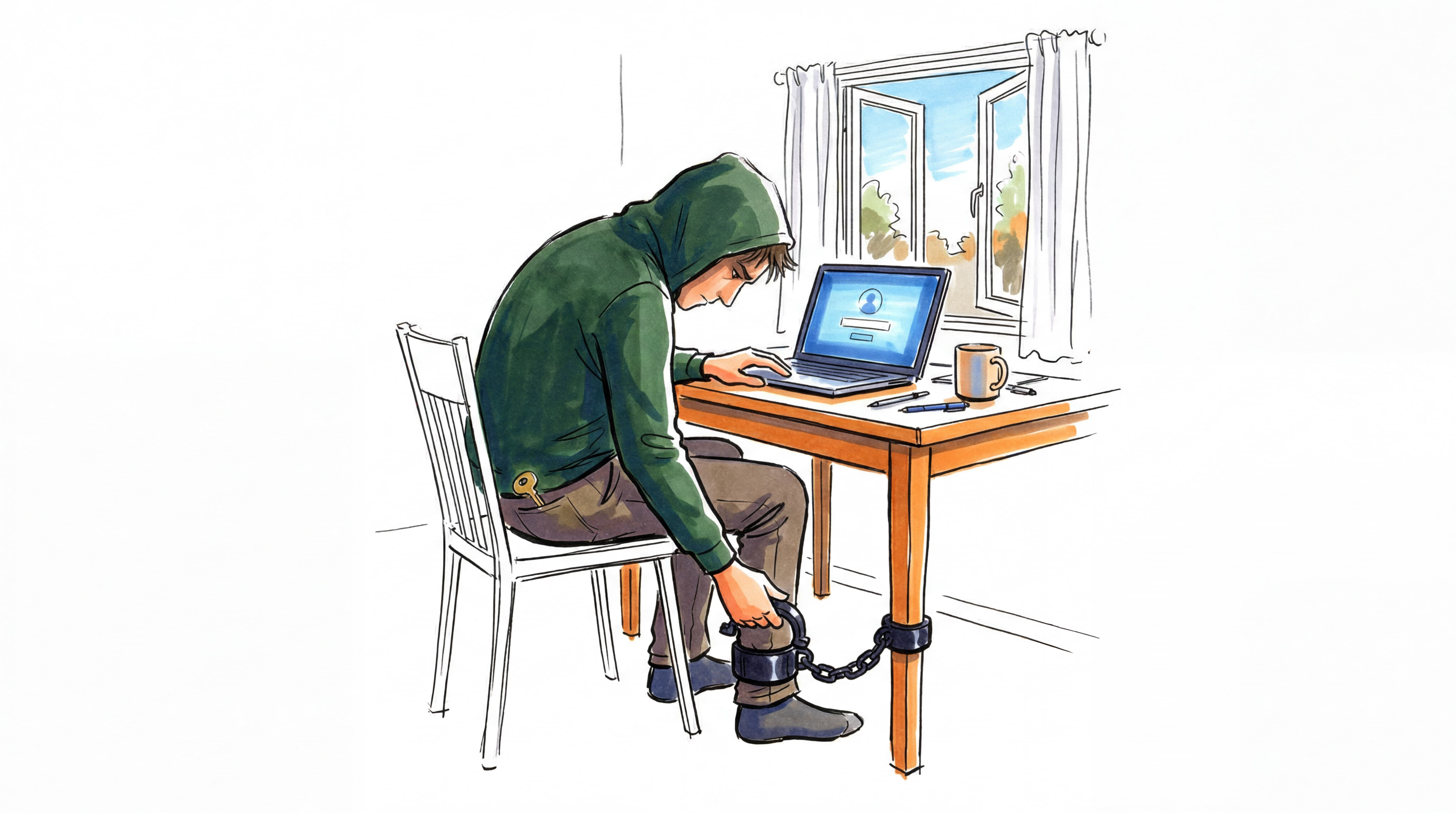
Last week, I dialed into Superior Court. There to help someone, a young man in my family, defend himself, which mostly meant sitting on a Zoom call while the docket rolled.
Most of the people the judge called weren’t on the call at all.
Maria Gonzalez, no response, default granted. José Ramirez, no response, default granted. The judge called another name, silence, yup default granted. It went on like this for a while.
The young man, he’s twenty-three now, was nineteen when he took out a loan. One of many loans that had been pitched to him since he was eighteen. The pitching started like clockwork at eighteen. The mailbox started filling up with offers from Upstart, CapitalOne, Discover and many lesser known predatory loan providers.
His car died and he needed another one for work (because we’ve made it impossible to live without one in this highway-centric country). He didn’t have to look far for the cash. No further than the trash for one of hundreds of loan offers. He grabbed the one that seemed most reputable to a nineteen year old, went online, clicked apply, already preapproved, accepted the terms he was never expected to read, and even if he had, they weren’t written to be understood.
He needed about $3,000, and he could afford about $100 a month, so he took the loan, got a check for about $3,000. That all seems fine right? So you’d think. In reality he owes over $5,500 at 30% interest. And the kicker, Upstart tacked on a $400 origination fee, financed at 30% over five years. The kid was paying interest for the privilege of getting a loan, a cost that should already have been baked into the excessive rate. A fee on top of the fee.
Upstart needed their cut. Corporate jets, executive bonuses, sushi at Nobu, and the kid gets the bill. You know, it’s hard raping and pillaging, but someone has to do it.
Because this is worth understanding, many, likely, still picture loans the way they used to work. You walk into a bank, a person looks at you, decides if you’re good for it, and writes you a check from money the bank has on hand. That’s not what happened here.
The kid’s loan was a financial product. It was originated by a bank that exists to rent its charter to fintech apps, held for six days, sold to the app, sold again the same day to an investment vehicle, moved into a trust four and a half months later, and charged off nine months after that. By the time he missed his first payment, his paper had passed through four entities. The interest rate wasn’t pricing the risk of whether he’d pay. It was pricing the certainty he would, for about a year, and then stop. His defaults were priced in from day one.
The originator collects the origination fee, the first year of inflated interest, and passes the paper down the pipe. By the time the loan goes bad, it’s been bundled and resold and resold again, and the buyers at the bottom of that pipe are not in the lending business. They’re scavengers. They buy charged-off paper by the pound. A spreadsheet of names, no contracts, no statements, no human beings attached. Four cents on the dollar. Then they file lawsuits in bulk, use the court system, our tax dollars funded, against defendants who can’t afford to show up, to collect face value on debts the original lender wrote off a year ago (or even longer ago). This is what modern lending is. Not a handshake. A pipeline with a slaughterhouse at the end.
Here’s the trap he didn’t know he was in. The loan was a personal loan, not a car loan. The car wasn’t collateral. So when someone hit his “new” car a few months later, and his liability-only insurance covered nothing, the car was gone but the debt remained. He still owed Upstart the full amount, for a car that no longer existed.
He lost his job due to a “restructure” and was out of work for six months. He defaulted on the loan, moved, and the calls stopped finding him. The loan got sold to a debt buyer, then another, then another. Six buyers in, someone decided it was worth suing for. They wanted thirty-seven hundred dollars from a kid who had borrowed twenty-nine, and already paid over thirteen hundred already.
Finally it was his turn, his name got called, he responded. The plaintiff’s attorney was called, she responded. The judge asked if she’d had a chance to respond to a motion. She said no. Then she said, and I’m paraphrasing but barely, that she was actually just there to see whether the defendant would show up.
Her job was not to argue. Not to prove. Not even to be heard. Her job was to witness an absence. She was being paid, by the hour, to confirm a no-show. And her job exists because most of the time, the defendant is absent, likely working their 2nd or 3rd job of the day. When no one answers, the default lands, the wages get garnished. Next case. A production line of defaults, with the government enforcing the garnishments.
Look, none of this is news. The predatory lending industry has been written about, congressed about, John Olivered about, forever. But knowing about it and sitting next to someone you love while he gets hunted are different experiences. The residue of the slaughter ends up on you. Watching the docket roll past name after name of people just like him, what hit me wasn’t any new piece of information. It was the recognition that every link in the chain was doing its job, nobody was being lazy, and nobody was even being corrupt. They were all being competent, and the cumulative effect was a machine designed to extract from the people least able to resist it.
It is extracting. And extracting. Extracting. EXTRACT! And it’s working. For now.
Almost anyone could run this. You could (I heard the money is good), are you into this kinda thing? Low six figures of capital, a collection license, automated filings, contract attorneys hired by the hour. You don’t have to see anybody. You don’t have to know which county your case is in. The defendants will not show up, because who the fuck can take a day off to dial into a hearing that was already decided yesterday. You win by default. You garnish their wages. You do it again next month. Fuck, you could likely get a Mac Mini, OpenClaw and Defaulting Skill going in an afternoon, AI will make this less humane, but much more efficient.
Don’t get me wrong this is not an argument against paying back what you borrow. If you signed the contract, sure, pay what you owe. The argument is against a system that writes contracts nobody can pay, then feeds the defaults into a second industry that exists to collect on the failure. If your business model requires interest rates above thirty percent to pencil out, you do not have a lending business. You have a farming operation. The defaults are the crop.
The honest version of this industry would cap consumer lending at a humane percentage, something below a multigenerational death sentence. If a borrower can’t qualify at that rate, they can’t afford the loan. Denying them the loan IS the kindness. The current version denies them nothing, because the denial isn’t the product, the default is.
And most people taking out these loans didn’t really need the loan. Yes, in the moment, each of them needed something specific. A car to get to work. A medical bill paid. A broken appliance replaced before the food spoiled. But what they actually needed, what the loan was covering for, was wages that covered rent. Healthcare that wasn’t priced like a yacht. The deal the country had between 1945 and 1980 and then stopped offering. They kept advertising it though, as long as you worked hard. (In what fucking world is twelve-hour days, seven days a week, across three jobs, not working hard? In what world is THAT the version of laziness someone needs to lecture you about?) The loan is what you take when the real thing you need is off the menu, and it’s never been on the menu, it was just an ad.
Let’s back up for a second, because the courtroom isn’t the story, the courtroom is where the story ends up. The real story is bigger than predatory lending on the working and now middle class (depending on your first and last name of course, and what the statistical model already decided about you).
From 1979 to 2020, worker productivity went up sixty percent. Wages went up sixteen. That missing forty-four percent went to the people who own the firm instead of work at it. Shareholders. Private equity. Whoever sits upstream of the actual work and takes a cut of what flows up. In the same window, the median American home went from about three-and-a-half years of family income to somewhere between six and twelve. So the math ain’t working no more. (Wages are a burden to companies, employees are a burden, a strangle on the operating costs, you’re not a team member, you’re a line item in the cost center to be reduced.)
You can’t work harder out of a gap that wide. What fills the gap is debt. Credit cards at twenty-seven percent. Personal loans at thirty. Student loans for a degree (now irrelevant) for jobs that are becoming irrelevant. Car loans to get to the job that won’t pay you enough to live near it. Medical debt, because your employer’s insurance makes you pay twelve thousand dollars before it does anything, if it does anything. And groceries, actual groceries, real food, not the neon boxes in aisle seven, those now come with a Klarna checkout option offering you a three, six, or twelve month payment plan on this week’s dinners.
Remember or know what layaway is? If you don’t, here is a primer: you buy an object by first paying it down over some period, then after the final payment clears, you take the thing home. Klarna is that arrangement inverted, you take the thing now. If you can’t pay, then the scavenger they sold your loan to comes for everything you have.
The debt is the bridge. The bridge exists because the road was destroyed (by a canyon being dug so a bridge would be required). The people who destroyed the road and dug the canyon own the toll booth on the bridge. Both sides of it. And when the debt finally breaks the person holding it, the collapse gets liquidated on Zoom calls or court rooms not dissimilar from the one I am observing.
Here’s where I’d normally tell you to educate your kids about money, or vote differently, or consolidate your loans. I’m not going to. It won’t help.
What’s happening is older than the loan. Throughout most of human history, most people were not free in any meaningful sense. Slaves, serfs, peasants, indentured servants, tenant farmers, sharecroppers, company-town workers. The king owned the land. The farmers paid rent to stand on the land the king’s soldiers had taken from the peasants. (The king paid the soldiers a cut of what the soldiers took. The soldiers were also peasants. That’s the part that’s always fascinated me. The peasantry, throughout history, has enforced its own subjugation for a piece of the action.)
What was new in the middle of the twentieth century, roughly 1945 to 1980 in the Western world, was a brief window where a working person could buy a home, raise a family, and retire. That period was not the historical norm, it was an anomaly, and that window is closed.
What we live in now is the old arrangement in new clothes. No king. No lord. No overseer with a whip. There’s a complex arrangement of LLC’s, Trusts and corporations, obfuscated by a well branded app. There’s a court that processes your absence in under a minute without anyone leaving the house. The arrangement is the same. The extraction is the same. If anything, this version is more elegant.
A slave knew they were a slave. Chattel slavery couldn’t run without the violence being visible. Our system runs on the belief, held by the indentured themselves, that they chose it, and any failure to thrive is personal. You should have read the contract. You should have saved more. You should have gone to a cheaper school. You should have chosen a different major. You should have married richer. You should have pulled yourself up by your bootstraps. (Except, there are no bootstraps, it’s a noose, and the more you pull the worse it gets.)
That belief is the innovation. Not the interest rate. Not the arbitration clause. The belief. And it is maintained by the second-oldest trick in the book, which is keeping the people getting crushed fighting each other instead of looking up.
When the Irish arrived in America in the 1800s they were treated like trash. A generation later they were managing Black slaves and calling themselves white. Not by accident. Give the second-worst-off group a sliver of authority over the worst-off group and they will defend the whole arrangement. You don’t have to convince them. You offer them something marginally above the floor. The buffer maintains itself. The people at the top barely have to do anything.
The trick still works, it’s very active, just scroll through your favorite social media app, or wherever you get your favorite propaganda, everyone is mad at each other.
The best metaphor I have for what’s been built is biological. Some parasites don’t hide from the host’s immune system. They rewrite it. Toxoplasma makes rats attracted to the smell of cat urine, so the rat walks itself into the cat, so the parasite completes its lifecycle. Certain cancers don’t evade the immune response, they recruit it. The tumor secretes signals that convince the surrounding immune cells to protect the tumor from the body’s other defenses. The security system gets conscripted into guarding the threat.
That’s what’s happened here. The courts exist, in theory, to protect people from fraud. They are the rooms where the fraud gets notarized. The idea of personal responsibility exists, in theory, to encourage good behavior. It is the thing that makes the indentured blame themselves instead of the people who wrote the terms. The credit score exists, in theory, to protect lenders from bad borrowers. It is the whip that keeps borrowers servicing debt they can’t afford to walk away from. In fact the credit score database, ordered low to high, is the predator’s shopping list. Low scores get 30% loan offers for peanuts, because they will default. Every defense mechanism has been turned around. The immune system thinks the parasite is the body and the body is the threat.
The attorney on our Zoom was a worker too (probably has a low credit score and unnecessary debt). Likely a contractor, picked from a bucket of names the plaintiff keeps for every county in every state. Contracted for this one hearing on this one day, paid a flat fee whether she won or lost, which is fine because the script doesn’t change. She’d likely been licensed in the late 80s, when being a lawyer was the thing your parents told you to become, the 1988 version of “learn to code.” Probably never made partner. Probably never went in-house. Probably solo, past sixty, working because she has to, taking contracts from debt buyers because that’s the work that’s available at the bottom of the profession she entered forty years ago when the story about it was different.
The people actually suing the defendant weren’t on the call. They don’t know his name, or hers, hell they probably don’t even know the name of the county. They have buckets of attorneys across the country, for counties they couldn’t locate on a map, running hearings they will never attend, against defendants whose absences they have priced into their returns.
We are all on this call, sometimes defendants and sometimes plaintiffs, but honestly most of us are the names being called while we’re at work, or asleep, or sitting on hold with a system that was never going to answer.